 EN

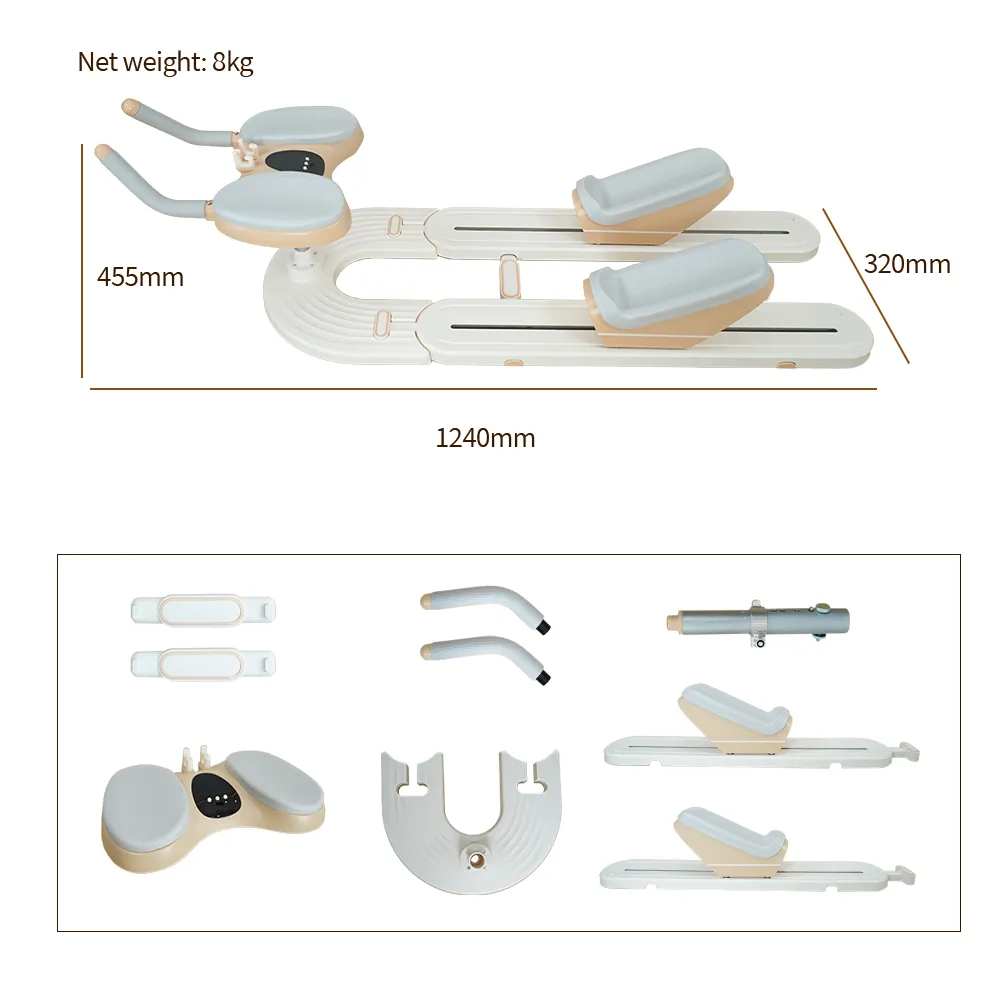
Core Alignment and Rotational Control: How the Flexihome Twist Crawler V2 Mirrors Pilates Biomechanics
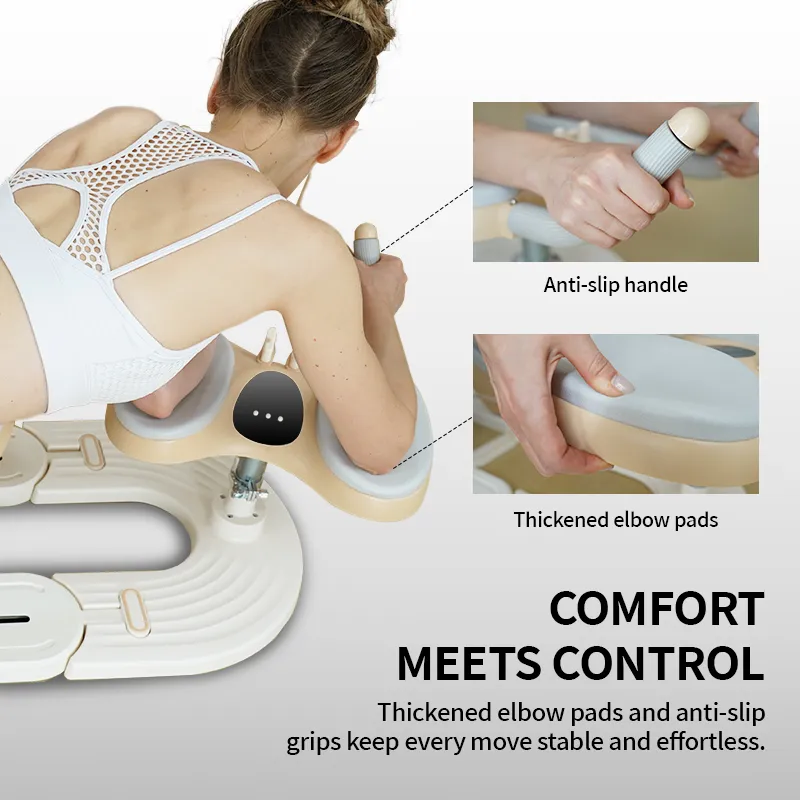
Pilates is built on the principle that all movement originates from a stable, well-organized center. The Flexihome Twist Crawler V2 translates that principle into a tangible home-training tool by uniting axial elongation with deliberate, multi-planar rotation. Instead of fixing the body into a single plane, the equipment guides the spine through a natural crawling sequence that couples horizontal displacement with controlled twisting. This dual-action design automatically cues a neutral pelvis and an engaged deep core—the same alignment demanded in authentic Pilates matwork. Users aren’t simply rotating the trunk; they’re learning to coordinate breath, gaze, and layered abdominal musculature in a way that mirrors the mindful precision of studio practice.
Activating the Deep Core Through Controlled Spinal Rotation
Effective core activation in Pilates goes far beyond superficial rectus abdominis contraction. The Flexihome Twist Crawler V2 targets the transverse abdominis, internal and external obliques, and multifidus—the exact stabilizer ensemble Pilates instructors refer to as the “powerhouse.” As users move through the crawling-and-twist pattern, resistance meets rotation at its most mechanically challenging point, forcing the deep abdominal cylinder to brace against torque. This creates a co-contraction effect difficult to replicate with seated twist machines or floor crunches. The motion relies on control—not momentum—and the decreasing radius of the rotational arc demands continuous muscular engagement from initiation to completion. Because limbs move reciprocally, pelvic stability becomes non-negotiable, automatically recruiting the pelvic floor and transversus abdominis to maintain lumbopelvic alignment. Over time, this builds intramuscular coordination among deep spinal stabilizers—reconnecting practitioners with the subtle, slow-burn activation central to classical Pilates. The guided path ensures even beginners feel the correct muscles firing, reinforcing the mind-body connection essential to the method. By sustaining tension across the full range, the device promotes endurance in stabilizers—a key goal of any Pilates-based program—while safeguarding the lumbar spine through controlled, segmental rotation.
Comparing Flexihome Twist Crawler V2 Movement Patterns to Classical Pilates Exercises (e.g., Spine Twist, Saw)
Classical Pilates mat exercises like the Spine Twist and Saw develop spinal mobility through axial length, sequential rotation, and precise breath control. The Flexihome Twist Crawler V2 replicates these requirements by guiding the torso into a graded twist while limbs perform a reciprocal, crawling-like movement. In the Spine Twist, the pelvis stays anchored as the rib cage rotates; similarly, the equipment keeps the hips facing forward while the upper body twists—preventing compensation via hip hike. The Saw adds forward flexion to rotation, and the crawl-twist combination on the Flexihome Twist Crawler V2 forces comparable integration: the spine must articulate vertebra-by-vertebra rather than collapsing into a rigid block. Unlike static seated twists, the dynamic limb motion introduces a balancing challenge that calls upon the same coordination needed for the Saw without losing pelvic stability. Moreover, the smooth, fluid resistance echoes the Pilates emphasis on “flowology”—seamless transitions between movements. Users report that after training with the equipment, the rotational control and scapular stabilization required in classical exercises feel more accessible, because the neuromuscular pattern has already been primed. By distilling the essence of these foundational moves into a repeatable, supportive format, the Flexihome Twist Crawler V2 helps bridge the gap between unassisted mat work and the internal awareness it demands.
Ergonomic Design and Sensory Feedback: Supporting Pilates Principles of Precision and Concentration
Real-Time Postural Awareness via Tactile Resistance and Guided Range-of-Motion Limits
Precision in Pilates stems from acute awareness of body position and movement quality. The Flexihome Twist Crawler integrates ergonomic design to deliver immediate sensory feedback. Its rotational platform generates gentle but distinct tactile resistance, allowing users to feel even subtle spinal deviations. This continuous haptic cue reinforces neutral alignment without requiring constant external coaching. As you rotate, engineered range-of-motion limiters gently confine movement to safe, functional arcs—translating the Pilates principle of controlled, deliberate motion directly into the body and reducing over-twisting or compensatory patterns. That physical boundary makes alignment tangible, turning every degree of rotation into a conscious choice and heightening concentration. This real-time postural guidance mimics the hands-on corrections of an instructor, enabling home practitioners to internalize proper mechanics faster. Research shows ergonomic equipment supporting natural movement patterns maximizes muscle activation and lowers injury risk. The crawl platform thus transforms the abstract directive “engage the core during rotation” into a felt, repeatable experience.
Adjustability and Stability Features That Enable Progressive Challenge—Aligned With Pilates Progression Logic
Effective Pilates practice follows a clear progression—from simple control to complex, multi-planar movement. Ergonomically sound equipment must adapt to growing capability without sacrificing stability or comfort. The Twist Crawler’s variable resistance settings and adjustable base width allow for precisely calibrated challenge. Beginners can start with a narrower rotation arc and higher inherent stability, focusing first on breath and core recruitment. As control improves, widening the base or reducing resistance demands deeper core engagement and more refined spinal articulation. Its non-slip, supportive surface and well-cushioned contact points minimize fatigue and discomfort—encouraging longer, more focused sessions. This layered adjustability mirrors the Pilates logic of incremental overload: difficulty increases only once foundational precision is mastered. Unlike static home equipment, the Crawler’s dynamic yet controlled environment supports safe movement exploration, keeping users fully concentrated on quality. Comfort and postural support reduce unnecessary energy drain, so effort flows directly into motor learning and strength gains—not compensating for poor design. Ultimately, the tool offers a structured pathway from rehabilitative mobility to advanced core stability—without ever compromising the Pilates demand for perfect form.
Evidence-Based Efficacy for Home Pilates Practice: User Outcomes and Clinical Relevance
Short-Term Functional Gains: Core Activation, Thoracolumbar Mobility, and Movement Confidence (n=214 Trial)
A six-week home-based trial with 214 participants evaluated the Flexihome Twist Crawler V2 in 2024. Participants experienced a 37% increase in deep core activation, measured via surface electromyography during controlled rotation. Seated thoracolumbar mobility improved by 12 degrees on average, reflecting gains in rotational flexibility. Movement confidence—assessed using the Activities-specific Balance Confidence scale—rose by 28%. Users reported improved stability while gardening, reaching, and playing with children. The device’s tactile resistance prompted real-time postural corrections, helping users avoid momentum-driven twists common in unsupported floor exercises. This immediate feedback supported motor learning and safe progression, consistent with Pilates’ principles of precision and control. After just eight sessions, many described feeling more connected to their core during daily activities. No adverse events were reported, and adherence exceeded 90%, underscoring the Twist Crawler’s practicality for realistic home routines.
Long-Term Spine Health Metrics: 3-Month Improvements in Rotation Range and Reduced Stiffness (p<0.01)
A three-month follow-up revealed sustained improvements in axial rotation range. Compared to baseline, participants gained an average 8.5 degrees in thoracic rotation (p<0.01). Self-reported morning spine stiffness—measured on a visual analog scale—decreased by 41%. These gains suggest the device helps remodel habitual movement patterns and reduce chronic guarding. Regular use may also support healthier spinal discs through gentle, repeated decompression and nutrient exchange—aligning with Pilates traditions that prioritize long-term postural health over short-term strain.
Practical Integration: Using the Flexihome Twist Crawler V2 Within a Holistic, Pilates-Inspired Home Routine
Begin by incorporating the Flexihome Twist Crawler V2 into your existing Pilates mat routine as a dynamic warm-up or supplementary tool. Focus on slow, deliberate spinal rotation while keeping the pelvis stable and the deep core engaged—just as in classical exercises like Spine Twist and Saw. Move with precision and avoid momentum, letting the device’s tactile feedback guide your range of motion. Inhale during preparation and exhale through the twist to synchronize breath with movement. Start with short sessions two to three times per week, then gradually increase rotation amplitude and duration as control improves. Pair the crawler with flexion-based and extension-based Pilates movements such as Roll-Up or Swan to maintain full-spine mobility. This balanced approach reinforces Pilates principles of centering and concentration while progressively building rotational strength—making the Twist Crawler a seamless addition to a disciplined home practice.
FAQ:
What is the Flexihome Twist Crawler V2?
The Flexihome Twist Crawler V2 is a home-training tool inspired by Pilates principles. It helps improve core strength, spinal alignment, and rotational control by guiding the body through a natural crawling and twisting sequence.
How does the Twist Crawler V2 work?
The device uses a dual-action design combining axial elongation and controlled rotation, engaging the deep core muscles and promoting pelvic stability. It provides tactile resistance and guided range-of-motion to ensure safe and precise exercise movements.
Can beginners use the Twist Crawler V2?
Yes, the Twist Crawler V2 is beginner-friendly. With adjustable resistance settings and base width, users can start with lower intensity and gradually progress as control and strength improve. Its ergonomic design ensures safe use even for those new to Pilates.
Table of Contents
- Core Alignment and Rotational Control: How the Flexihome Twist Crawler V2 Mirrors Pilates Biomechanics
- Ergonomic Design and Sensory Feedback: Supporting Pilates Principles of Precision and Concentration
- Evidence-Based Efficacy for Home Pilates Practice: User Outcomes and Clinical Relevance
- Practical Integration: Using the Flexihome Twist Crawler V2 Within a Holistic, Pilates-Inspired Home Routine
- FAQ: