 EN
EN

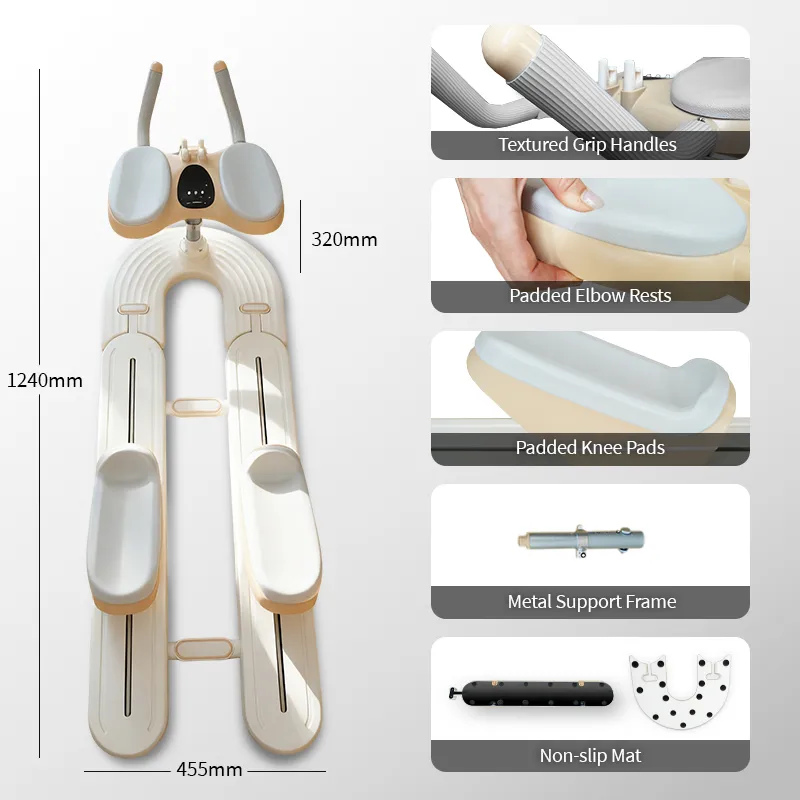
Improving flexibility is a critical component of overall fitness, particularly for maintaining spinal health and preventing injury. The Spine Twist & Stretch Trainer offers a targeted solution for individuals seeking to enhance their spinal mobility, strengthen core muscles, and develop better rotational movement patterns. This specialized equipment combines controlled twisting motions with stretching capabilities to address the specific needs of modern lifestyles that often involve prolonged sitting and limited spinal movement.

The systematic approach to flexibility improvement using a Spine Twist & Stretch Trainer involves understanding proper form, progressive training methods, and consistent application of specific techniques. Unlike traditional stretching methods, this equipment provides controlled resistance and guided movement patterns that help users achieve deeper stretches while maintaining safety. The combination of twisting and stretching motions targets multiple muscle groups simultaneously, making it an efficient tool for comprehensive flexibility development.
Understanding the Mechanics of Spinal Flexibility Training
How Rotational Movement Affects Spinal Health
The spine's natural ability to rotate and flex is essential for daily activities ranging from reaching for objects to playing sports. When using a Spine Twist & Stretch Trainer, the controlled rotational movements help maintain and improve the intervertebral joints' range of motion. The equipment's design allows for gradual progression in rotational capacity while supporting the spine's natural curves and alignment.
Regular rotational exercises with the Spine Twist & Stretch Trainer activate the deep stabilizing muscles of the core, including the multifidus and transverse abdominis. These muscles play a crucial role in spinal stability and are often underactive in individuals with sedentary lifestyles. The twisting motion engages these muscles in their functional capacity, improving both strength and flexibility simultaneously.
The biomechanical advantage of using structured equipment lies in its ability to provide consistent resistance throughout the range of motion. This controlled environment allows users to focus on proper form while gradually increasing their flexibility limits without the risk of sudden overstretching or loss of balance that might occur with free-form exercises.
The Role of Progressive Resistance in Flexibility Development
Progressive resistance training using the Spine Twist & Stretch Trainer follows the principle of gradual adaptation, where the body slowly adjusts to increasing demands. This approach is particularly effective for flexibility improvement because it allows the nervous system to adapt to new ranges of motion while building strength in those extended positions.
The equipment typically features adjustable resistance settings that enable users to customize their training intensity based on their current flexibility level and strength capacity. Beginning with lighter resistance allows for focus on movement quality and range of motion, while gradually increasing resistance challenges the muscles to maintain control through greater ranges of motion.
This progressive approach helps prevent the common plateau effect that many individuals experience with static stretching routines. By continuously challenging the body with appropriate levels of resistance, the Spine Twist & Stretch Trainer promotes ongoing improvements in both flexibility and functional strength.
Specific Techniques for Maximizing Flexibility Gains
Proper Setup and Body Positioning
Achieving optimal results with the Spine Twist & Stretch Trainer begins with correct setup and body positioning. The seat height should be adjusted so that the hips are slightly higher than the knees, promoting proper spinal alignment throughout the exercise. The feet should be firmly planted on the footrests with the knees aligned over the ankles.
The torso should maintain an upright posture with the shoulders relaxed and pulled back slightly. This positioning ensures that the twisting motion originates from the spine rather than compensation from other body segments. The hands should grip the handles with a firm but relaxed hold, allowing for smooth, controlled movement without excessive tension in the upper extremities.
Before beginning any twisting motion, it's essential to engage the core muscles gently. This pre-activation creates a stable foundation for the spine and helps maintain proper alignment throughout the range of motion. The breathing pattern should be coordinated with the movement, exhaling during the twist and inhaling during the return to center.
Movement Patterns for Different Flexibility Goals
Different movement patterns on the Spine Twist & Stretch Trainer can target specific flexibility goals. For general spinal mobility, alternating slow, controlled twists to each side with brief holds at the end range help improve overall rotational capacity. The movement should be smooth and continuous, avoiding any jerky or rapid motions that could strain the spinal structures.
For individuals seeking to improve athletic performance, dynamic twisting patterns that simulate sport-specific movements can be incorporated. These might include faster rotational speeds with shorter hold times, or combining the twisting motion with slight forward or backward flexion to target multiple movement planes simultaneously.
Those focusing on rehabilitation or addressing specific stiffness areas may benefit from longer hold times at comfortable end ranges, combined with gentle oscillating movements. This approach allows the soft tissues to gradually adapt to new positions while maintaining a safe, controlled environment for improvement.
Developing a Progressive Training Program
Beginner Phase: Foundation Building
The initial phase of training with the Spine Twist & Stretch Trainer focuses on establishing proper movement patterns and building basic flexibility. Beginners should start with 2-3 sessions per week, allowing adequate recovery time between sessions. Each session should begin with a 5-10 minute warm-up of gentle movements to prepare the spine for more intensive stretching.
During the first 2-4 weeks, the emphasis should be on learning proper form and developing awareness of spinal movement. Resistance levels should be set at the lowest comfortable setting, allowing for full range of motion without strain. Sessions typically last 15-20 minutes, with movements performed slowly and deliberately.
The beginner phase should include basic twisting patterns in both directions, with holds of 15-30 seconds at comfortable end ranges. Users should focus on maintaining proper breathing throughout the movement and avoiding any positions that cause discomfort or pain. Progress is measured by increased comfort in the movements and gradual improvements in range of motion rather than increases in resistance or intensity.
Intermediate and Advanced Progression Strategies
As users become comfortable with basic movements on the Spine Twist & Stretch Trainer, progression involves increasing both the complexity of movements and the training parameters. Intermediate users can increase session frequency to 4-5 times per week and extend session duration to 25-30 minutes. Resistance levels can be gradually increased as strength and flexibility improve.
Advanced progression strategies include incorporating multi-planar movements that combine twisting with forward and backward bending motions. These complex movement patterns challenge the spine's ability to maintain stability while moving through multiple ranges of motion simultaneously. Advanced users may also experiment with varying speeds within a single session, alternating between slow, controlled stretches and more dynamic movements.
The integration of breathing techniques becomes more sophisticated at advanced levels, with users learning to coordinate specific breathing patterns with different phases of the movement. This coordination enhances both the effectiveness of the stretch and the overall mind-body connection during training.
Integrating Spine Twist Training with Overall Fitness
Complementary Exercises and Activities
The Spine Twist & Stretch Trainer works most effectively when integrated into a comprehensive fitness program that includes complementary exercises and activities. Core strengthening exercises such as planks, dead bugs, and bird dogs help build the foundational strength needed to support improved flexibility gains. These exercises can be performed on non-equipment days to maintain core activation and spinal stability.
Cardiovascular activities that involve rotational movements, such as swimming or certain dance forms, can enhance the functional application of flexibility gains achieved through Spine Twist & Stretch Trainer use. These activities help translate the improved range of motion into real-world movement patterns and functional capacity.
Yoga and Pilates practices complement the structured approach of the Spine Twist & Stretch Trainer by providing additional movement variety and emphasizing the mind-body connection. These practices often include similar rotational movements performed in different positions and contexts, reinforcing the flexibility gains achieved through equipment-based training.
Lifestyle Factors That Enhance Training Results
Maximizing the benefits of Spine Twist & Stretch Trainer use requires attention to lifestyle factors that support flexibility development. Adequate hydration is crucial for maintaining tissue pliability and supporting the physiological processes involved in flexibility adaptation. Users should aim to consume water consistently throughout the day, with particular attention to hydration before and after training sessions.
Sleep quality significantly impacts recovery and adaptation processes. During sleep, the body repairs micro-damage to tissues and consolidates motor learning patterns developed during training. Individuals using the Spine Twist & Stretch Trainer should prioritize 7-9 hours of quality sleep nightly to support their flexibility development goals.
Stress management also plays a crucial role in flexibility improvement. Chronic stress can lead to increased muscle tension and reduced flexibility gains. Incorporating stress-reduction techniques such as meditation, deep breathing exercises, or regular relaxation practices can enhance the effectiveness of physical training with the Spine Twist & Stretch Trainer.
Monitoring Progress and Avoiding Common Mistakes
Tracking Flexibility Improvements
Effective progress monitoring with the Spine Twist & Stretch Trainer involves both objective and subjective measures of improvement. Objective measures include tracking the degrees of rotation achieved during training sessions, resistance levels used, and duration of holds at end ranges. Many users find it helpful to maintain a training log that records these parameters along with any notable observations about ease of movement or areas of particular tightness.
Subjective measures focus on how the body feels during and after training sessions. Improvements might include reduced stiffness upon waking, increased ease of daily activities involving rotation (such as backing out of parking spaces), or enhanced comfort during prolonged sitting or standing. These functional improvements often provide more meaningful indicators of progress than purely numerical measures.
Regular assessment sessions, perhaps monthly, can involve performing standardized movements to evaluate range of motion improvements. These might include simple seated spinal twists without the equipment, forward bends, or other functional movement screens that reflect the training adaptations achieved through consistent Spine Twist & Stretch Trainer use.
Common Errors and How to Prevent Them
One of the most common mistakes when using the Spine Twist & Stretch Trainer is progressing too quickly in terms of resistance or range of motion. The desire to see rapid results can lead users to push beyond their current capabilities, potentially resulting in strain or injury. Flexibility development is inherently a gradual process, and attempting to force progress often leads to setbacks rather than advancement.
Another frequent error involves poor breathing patterns during exercise. Many users hold their breath during challenging stretches or breathe shallowly due to concentration on the movement. Proper breathing is essential for muscle relaxation and optimal stretching effectiveness. Users should practice coordinating their breathing with the movement pattern, using exhalation to facilitate deeper stretches and inhalation to support the return to starting position.
Inconsistent training schedules represent another significant barrier to progress with the Spine Twist & Stretch Trainer. Flexibility improvements require regular, consistent stimulus to maintain and build upon previous gains. Sporadic training sessions, even if intensive, are less effective than moderate, consistent training over time. Users should establish a realistic training schedule that can be maintained long-term rather than attempting overly ambitious programs that are difficult to sustain.
FAQ
How often should I use the Spine Twist & Stretch Trainer to see flexibility improvements?
For optimal flexibility improvements, beginners should use the Spine Twist & Stretch Trainer 2-3 times per week, allowing at least one day of rest between sessions. As your body adapts and flexibility increases, you can gradually increase frequency to 4-5 times per week. Consistency is more important than frequency - regular use over several weeks will yield better results than sporadic intensive sessions. Most users begin to notice improvements in spinal mobility within 3-4 weeks of consistent use.
Can the Spine Twist & Stretch Trainer help with lower back pain?
The Spine Twist & Stretch Trainer can be beneficial for individuals with certain types of lower back pain, particularly those related to stiffness and limited spinal mobility. The controlled rotational movements help improve spinal flexibility and strengthen supporting core muscles. However, it's essential to consult with a healthcare provider before using the equipment if you have existing back problems. Start with minimal resistance and gentle movements, and discontinue use if any exercise causes increased pain or discomfort.
What resistance level should I start with on the Spine Twist & Stretch Trainer?
Beginners should always start with the lowest resistance setting available on the Spine Twist & Stretch Trainer. This allows you to focus on proper form and movement patterns without the added challenge of significant resistance. You should be able to complete the full range of motion comfortably and maintain control throughout the movement. Only increase resistance once you can perform 15-20 controlled repetitions in each direction with perfect form and no discomfort.
How long should each training session last with the Spine Twist & Stretch Trainer?
Training sessions with the Spine Twist & Stretch Trainer should typically last 15-30 minutes, depending on your experience level and fitness goals. Beginners should start with 15-20 minute sessions, including a brief warm-up and cool-down period. Advanced users may extend sessions to 25-30 minutes to incorporate more complex movement patterns and longer hold times. Quality of movement is more important than duration - shorter, focused sessions with proper form are more beneficial than longer sessions with compromised technique.
Table of Contents
- Understanding the Mechanics of Spinal Flexibility Training
- Specific Techniques for Maximizing Flexibility Gains
- Developing a Progressive Training Program
- Integrating Spine Twist Training with Overall Fitness
- Monitoring Progress and Avoiding Common Mistakes
-
FAQ
- How often should I use the Spine Twist & Stretch Trainer to see flexibility improvements?
- Can the Spine Twist & Stretch Trainer help with lower back pain?
- What resistance level should I start with on the Spine Twist & Stretch Trainer?
- How long should each training session last with the Spine Twist & Stretch Trainer?