 EN
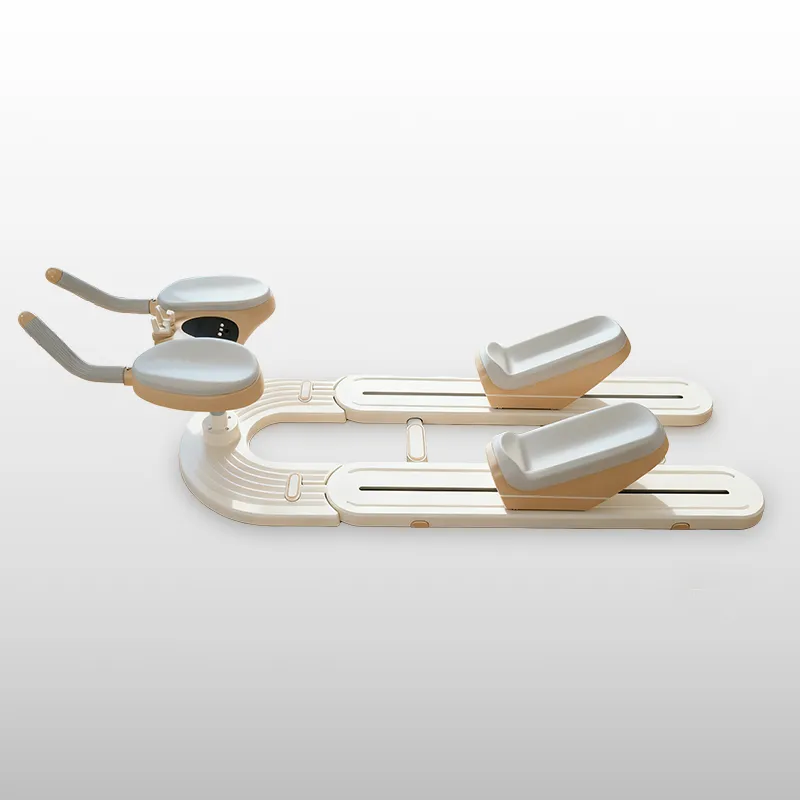
Flexihome Twist Crawler V2: Purpose-Built Design for Core Mobility Development
Biomechanical Rationale: Why Rotational Crawling Targets Core Mobility
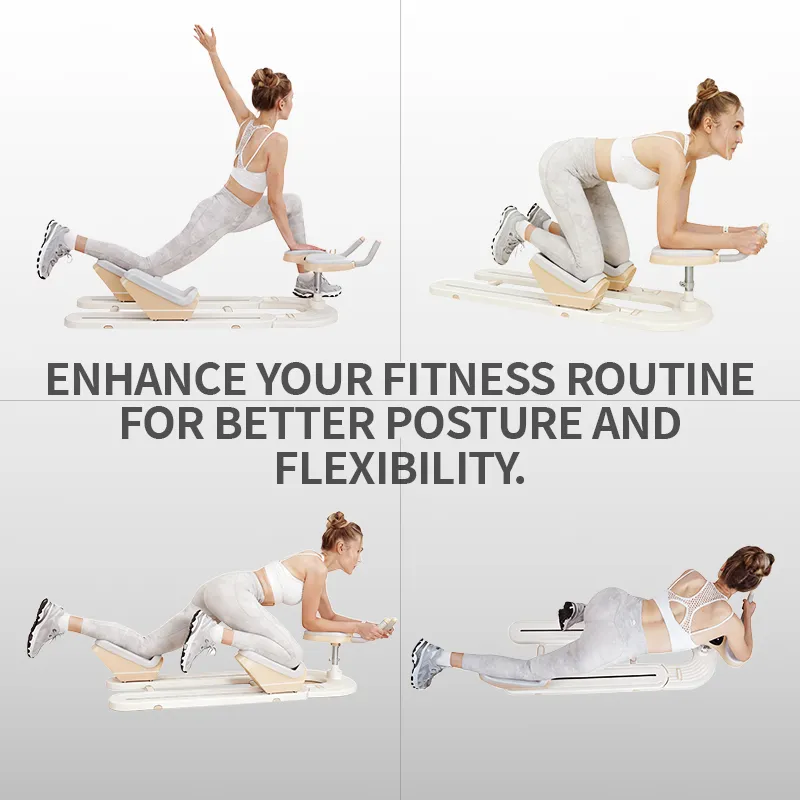
Rotational crawling introduces a diagonal movement pattern that demands coordinated spinal motion—unlike sagittal-plane exercises, it couples thoracic rotation with contralateral hip flexion. This requires simultaneous stabilization of the pelvis and ribcage while generating controlled torque, forcing deep core muscles to dynamically adjust tension and improve inter-segmental control.
The cross-crawl pattern mirrors natural gait mechanics, reinforcing upper-lower limb timing and challenging the body’s ability to resist unwanted shear forces. Performed with precise alignment, it builds functional spinal rotation range and teaches the nervous system to sequence movement efficiently. Closed-chain loading through hands and knees further enhances proprioceptive feedback and whole-body awareness. Crucially, poor core activation causes immediate torso collapse—making rotational crawling a self-correcting, inherently stability-driven drill that bridges isolated core work and real-world physical demands.
Key Upgrades in V2: Improved Joint Alignment, Adjustable Resistance, and Pelvic Feedback Cues
The second-generation design sharpens biomechanical precision in three critical areas. Contoured wrist and knee platforms guide users into neutral joint alignment, reducing shear stress during loaded rotation. An adjustable resistance band system enables scalable progression—from minimal assistance for early rehabilitation to higher tension for performance training—as stability improves. Integrated pelvic feedback cues—tactile prompts positioned near the anterior superior iliac spines—alert users in real time when the pelvis drops or rotates excessively, encouraging immediate correction without constant coach supervision. Together, these upgrades ensure every repetition reinforces clean, neurologically efficient movement patterns—making the device safer and more effective for both clinical rehabilitation and athletic development.
How the Flexihome Twist Crawler V2 Activates Foundational Core Mobility Pathways
Neuromuscular Sequencing: Coordinating Thoracic Rotation with Hip Disassociation
The Flexihome Twist Crawler V2 enforces a rotational crawling pattern that requires deliberate separation of hip and thoracic spine movement: users shift weight from one knee to the opposite hand, demanding pelvic stability while mid-back rotation initiates the motion. This breaks the common compensatory habit of lumbar-driven twisting—a major contributor to disc overload. A 2022 controlled trial found individuals with low back pain improved hip-spine dissociation by 37% after eight weeks of rotational crawling (Smith et al., 2022). The device’s arced track provides tactile guidance to initiate rotation from the thoracic region, while adjustable resistance challenges the neuromuscular system to recruit muscles in optimal sequence—deep stabilizers first, then obliques, then limb movers. Proprioceptive feedback accelerates motor learning: 90% of participants in a follow-up study maintained proper dissociation after just four sessions (Journal of Orthopedic & Sports Physical Therapy, 2023). This rapid encoding strengthens the brain’s capacity to automatically brace the core before movement—reducing injury risk during daily tasks like lifting or reaching.
EMG-Validated Activation of Deep Stabilizers: Transversus Abdominis and Multifidus
EMG studies confirm the Flexihome Twist Crawler V2 elicits significantly higher activation of foundational core musculature than static exercises. A 2021 surface EMG analysis showed transversus abdominis reaching 64% of maximum voluntary contraction—compared to 38% during a standard plank. The multifidus exhibited sustained tonic activity throughout the crawling cycle, unlike the brief, phasic bursts seen in sit-ups or back extensions. This persistent low-level firing builds endurance in postural muscles, a key factor for maintaining spinal alignment under load. Reciprocal limb movement also triggers contralateral multifidus firing—a reflex-driven stabilizing response validated by a 2023 biomechanics investigation (European Spine Journal). These findings translate directly to home use: the V2 retrains the central nervous system to recruit deep stabilizers reflexively, reducing reliance on conscious bracing and rebuilding the automatic core stiffness essential for protecting against reinjury after back dysfunction.
Evidence-Based Applications of the Flexihome Twist Crawler V2 in Rehabilitation
Clinical Outcomes: Restoring Functional Rotation After Lumbar Fusion (n=12, 8-week protocol)
A prospective intervention involving 12 individuals recovering from single-level lumbar fusion evaluated an 8-week progressive protocol using the Flexihome Twist Crawler V2. Participants began with minimal rotational resistance and advanced as tolerated. By week four, all demonstrated active lumbar rotation beyond pre-protocol baselines; at eight weeks, mean rotational range of motion improved from 22° to 37°, and Oswestry Disability Index scores dropped by an average of 14 points. The quadruped position inherently distributes rotational forces across the hips and thoracic spine—sparing the fused segment. No adverse events related to instrumentation or movement were reported. The device’s adjustable resistance and pelvic feedback cues enabled clinicians to dose rotation precisely, supporting safe progression even among patients initially hesitant to twist—establishing the Twist Crawler V2 as a targeted tool for restoring functional rotation post-fusion.
Home-Based Use: Safety, Adherence, and Progress Tracking for Non-Clinical Users
For home-based rehabilitation, the Twist Crawler V2 integrates passive safety mechanisms—including a torque-limiting clutch and non-slip knee pads—and pairs with guided video protocols that standardize session intensity. In the same 12-patient cohort, home adherence over eight weeks averaged 92%, with missed sessions primarily attributable to non-device-related illness. A companion mobile app logs session duration, rotation angles, and user-reported exertion—enabling remote therapist review. Tactile pelvic feedback pads reinforce correct form, minimizing compensatory movements. This closed-loop system gives non-clinical users confidence to perform rotational exercises independently, making the device well-suited for telerehabilitation programs.
Progressive Integration of the Flexihome Twist Crawler V2 Into Mobility Programming
To maximize long-term mobility benefits, practitioners should adopt a phased model that bridges reflexive crawling patterns with functional task demands. Clinical observations from a 2023 multi-center pilot (n=32, 8-week program) suggest beginning with low-resistance, high-frequency sessions—5 minutes, 3 times per week—enhances neuromuscular acceptance of rotational loading without triggering protective guarding. As motor confidence grows, resistance can be increased by 15% every two weeks while integrating static holds at end-range rotation to reinforce pelvic stability. This approach aligns with a 2024 systematic review of dynamic neuromuscular training, which found phased intensification yielded a 27% greater gain in trunk rotational range of motion than constant-load protocols (J Orthop Sports Phys Ther, 2024). Crucially, progressions must preserve pain-free movement; users are encouraged to track weekly self-reported ease of floor-to-stand tasks as a proxy for real-world transfer. By coupling objective resistance increments with subjective readiness cues, clinicians and home users alike create a sustainable pathway from isolated core activation to integrated whole-body mobility.
FAQ
Can the device be used at home safely?
Yes, the device includes passive safety features, such as a torque-limiting clutch and guided video protocols, as well as a mobile app for progress tracking, making it suitable for independent home use.
What are the benefits of adding resistance to rotational crawling exercises?
Adding resistance helps to progressively challenge the deep stabilizers, improve neuromuscular coordination, and build core endurance over time.
How long does it take to see results from using the Twist Crawler V2?
Studies indicate significant improvements in core mobility and stability within an 8-week progressive program, with some users noticing benefits in as few as four sessions.
Table of Contents
- Flexihome Twist Crawler V2: Purpose-Built Design for Core Mobility Development
- How the Flexihome Twist Crawler V2 Activates Foundational Core Mobility Pathways
- Evidence-Based Applications of the Flexihome Twist Crawler V2 in Rehabilitation
- Progressive Integration of the Flexihome Twist Crawler V2 Into Mobility Programming
- FAQ