 EN
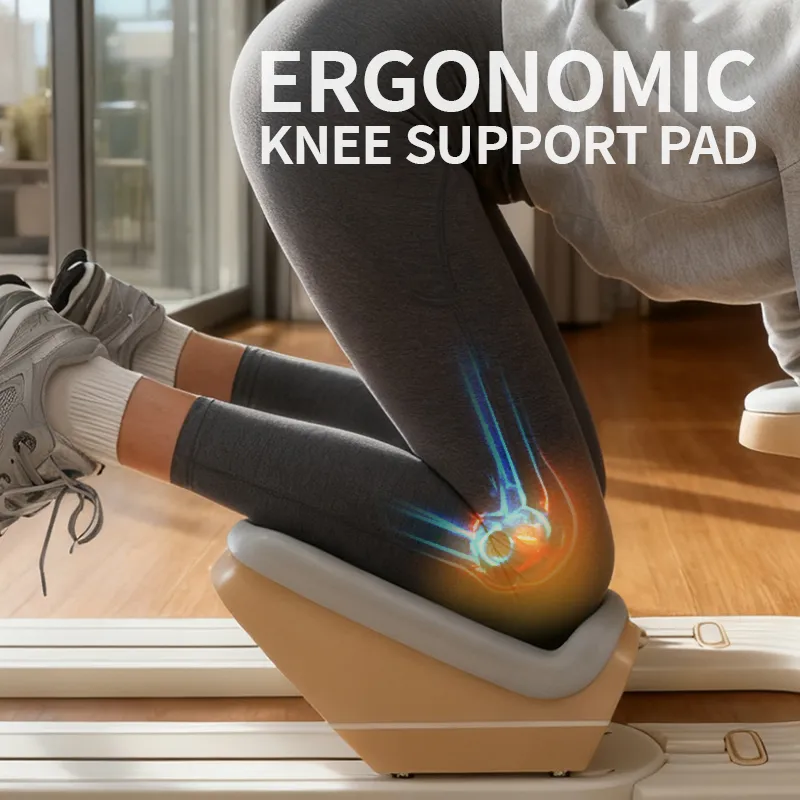
How the Flexihome Twist Crawler V2 Enhances Thoracic and Lumbar Mobility Through Dynamic Twisting
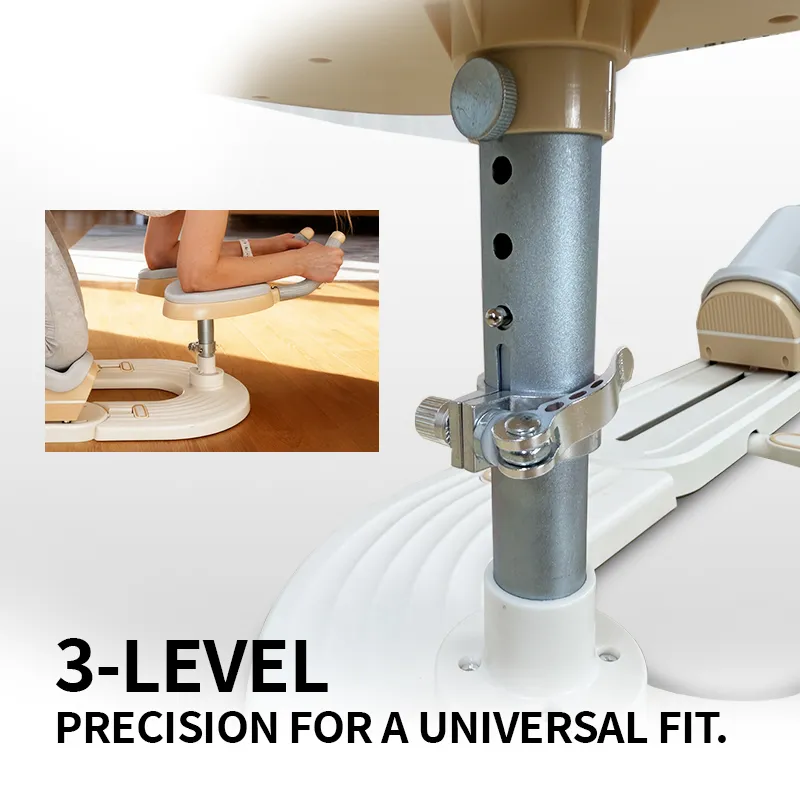
Biomechanics of Rotational Motion: Why Thoracic Spine Rotation Is Foundational to Waist Mobility
The thoracic spine is uniquely built for rotation—contributing up to 35 degrees of axial twist per segment—while the lumbar spine is structurally constrained to just ~5 degrees. This design makes thoracic mobility the true engine of waist-level movement. The Flexihome Twist Crawler V2 leverages this biomechanical reality by pairing forward crawling with controlled, sequential spinal rotation—from T1 down through L5. Each twist gently lengthens intercostal tissues and stimulates synovial fluid circulation in facet joints, supporting joint nutrition and glide. Unlike static stretches that isolate planes, this dynamic pattern integrates pelvis, ribcage, and cervical spine into a coordinated kinetic chain. For sedentary adults, consistent use helps reverse lower thoracic stiffness—the common root cause of compensatory lumbar rotation, disc shear, and facet irritation. By reinforcing proper rotational sequencing, the device retrains neuromuscular control to distribute load more evenly across the spine.
Lateral Flexion & Controlled Articulation: How the Flexihome Twist Crawler V2 Engages Obliques, Quadratus Lumborum, and Multifidus
The twisting crawl naturally activates deep lateral stabilizers often underused in upright movement. As weight shifts side-to-side, the internal and external obliques fire eccentrically to modulate rotation, while the quadratus lumborum anchors the 12th rib to the iliac crest—preventing excessive pelvic tilt. Simultaneously, the multifidus stabilizes each vertebral segment against shear. The Flexihome Twist Crawler V2 transforms this coordination into a rhythmic, low-impact drill: every step demands subtle lateral flexion, stretching contralateral obliques and strengthening ipsilateral quadratus lumborum. This synergy strengthens the “corset” effect of the transversus abdominis and improves side-bending range. Over time, users report greater spinal resilience during daily tasks—reaching, bending, or sitting upright—because deep stabilizers learn to anticipate and regulate load without conscious effort.
Flexihome Twist Crawler V2 for Daily Spine Maintenance—Especially for Sedentary Professionals
Integrating 5-Minute Daily Sessions into Desk-Based Routines
Just five minutes a day with the Flexihome Twist Crawler V2 makes spinal maintenance practical for desk-bound professionals. Performed before the first meeting or after two hours of sitting, these brief sessions counteract the forward-flexed, rotationally deprived posture endemic to screen-based work. The device’s guided twisting motion restores thoracic rotation and gentle lateral flexion—easing mid-back and lumbar stiffness without fatigue or disruption to workflow. Users can place it beside their chair and integrate it seamlessly into mental breaks—no change of clothes or gym visit required. Because short, consistent practice builds neuromuscular familiarity, daily use supports progressive, sustainable gains in natural spinal mobility. Research on exercise adherence confirms that 5–10 minute sessions significantly outperform longer workouts in long-term compliance—making integration nearly automatic.
Real-World Relief: User-Reported Reduction in Waist Stiffness and Lower Back Discomfort (n=217)
A self-reported survey of 217 sedentary professionals found meaningful improvements in waist stiffness and lower back discomfort after four weeks of daily 5-minute Flexihome Twist Crawler V2 use. Most participants noted reduced tightness upon standing from a seated position—and many reported greater ease when tying shoes, reaching across a desk, or transitioning between tasks. The rotating platform and guided track produce a gentle decompressive effect on spinal joints, while the twisting motion re-engages deep stabilizers like the multifidus and obliques—muscles commonly inhibited by prolonged sitting. Importantly, relief emerged without reliance on passive modalities like massage or heat. These consistent, real-world outcomes underscore how brief, equipment-guided rotational training delivers tangible, daily resilience for screen-tethered individuals.
Evidence-Informed Benefits: Posture Support, Core Activation, and Non-Invasive Spinal Decompression
Active Decompression vs. Passive Modalities: How Dynamic Twisting Differs From Inversion or Traction
Passive decompression methods—such as inversion tables or static traction—rely on gravity or external force to distract spinal joints without engaging musculature. In contrast, active decompression via controlled rotation recruits deep stabilizers while reducing intradiscal pressure. Dynamic twisting creates rhythmic load-shifts that open intervertebral foramina and enhance nutrient diffusion into discs—supporting both mobility and motor control. The Flexihome Twist Crawler V2 embodies this principle: its guided arc initiates segmental rotation at the thoracic level and propagates downward, relieving lumbar compression while simultaneously activating oblique and multifidus chains. The result is self-generated, non-invasive unloading—distinct from passive approaches that may leave surrounding musculature disengaged or even inhibited.
Postural Re-Education and Neuromuscular Feedback via Repetitive, Controlled Flexihome Twist Crawler V2 Movement
Poor posture rarely stems from isolated weakness—it reflects altered proprioception and inefficient neuromuscular recruitment. Effective re-education requires precise, repeated movement that delivers clear sensory feedback about joint position and muscle timing. The Flexihome Twist Crawler V2 provides exactly that: its controlled arc challenges the core to stabilize pelvis and ribcage while the thoracic spine rotates, reinforcing symmetrical loading across segments. With repetition, this sensory-motor dialogue trains the central nervous system to sustain upright alignment automatically—not as a conscious correction, but as an ingrained habit. Core muscles—including multifidus, transversus abdominis, and pelvic floor—fire in coordinated sequence, while spinal erectors learn to alternate contraction and relaxation with each twist. This dynamic reprogramming translates directly to daily life: less slouched sitting, fewer compensatory hip hinges, and reduced chronic stress on lumbar structures.
FAQ
What is the Flexihome Twist Crawler V2?
The Flexihome Twist Crawler V2 is a device designed for spinal mobility that integrates dynamic twisting to enhance thoracic and lumbar movement.
How does it help sedentary professionals?
It counteracts poor posture from prolonged sitting by restoring thoracic rotation and lateral flexion with brief daily sessions.
Can it replace traditional stretches?
Yes, because it offers dynamic patterns that engage the entire spine and core in coordinated movement, unlike static stretches.