 EN
EN

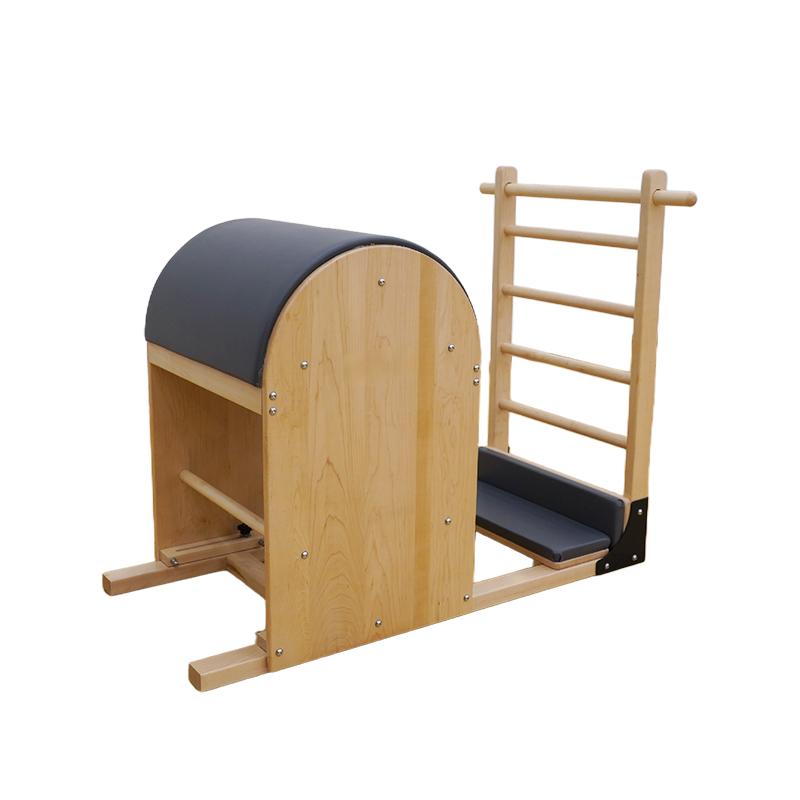
The ladder barrel is one of the most versatile and structurally intelligent pieces of Pilates equipment available today. Designed with a curved barrel surface and a runged ladder frame, the ladder barrel creates a uniquely supportive environment for developing core strength, improving spinal mobility, and building genuine flexibility. Whether used in a professional studio or a dedicated home gym, the ladder barrel addresses movement patterns that flat-surface training simply cannot replicate.
Understanding how the ladder barrel actually works — mechanically and physiologically — helps practitioners and studio owners make smarter decisions about training methodology. The ladder barrel is not simply a prop or a passive support device. It is an active training tool that guides the spine through full ranges of motion, challenges deep stabilizing muscles, and provides graduated resistance for flexibility work. This article breaks down exactly how the ladder barrel supports both core strength and flexibility training, section by section.
The Structural Design of the Ladder Barrel
How the Barrel Arc Supports Spinal Movement
The defining feature of the ladder barrel is its convex arc, which is precisely shaped to mirror the natural curvature of the human spine. When a practitioner lies over the ladder barrel, the arc provides passive support to the lumbar and thoracic regions simultaneously, allowing the spine to decompress and extend beyond its neutral range. This is a movement that most other training equipment cannot facilitate safely. The ladder barrel essentially acts as a contoured base that cradles the spine during extension work, making it possible to stretch the back muscles, hip flexors, and abdominals in a controlled and progressive manner.
The ladder barrel is engineered so that the apex of the arc aligns with the mid-spine for most users, distributing bodyweight evenly and reducing localized pressure. This design principle means that the ladder barrel supports rather than strains the structures it contacts. In back extension exercises, the ladder barrel allows the spine to open gradually, building length and suppleness in the posterior chain without the risk of hyperextension that comes from unsupported floor work.
The Role of the Ladder Rungs in Core Activation
The vertical ladder component of the ladder barrel is far more than a handle structure. The rungs provide grip points at multiple heights, which allows the practitioner to adjust leverage and resistance during exercises. When gripping a lower rung on the ladder barrel, the practitioner increases the mechanical demand placed on the core because the arms are extended further from the center of gravity. Conversely, holding a higher rung on the ladder barrel shortens the lever arm and reduces the load on the core stabilizers. This graduated resistance system makes the ladder barrel suitable for beginners and advanced practitioners alike.
During hanging and traction exercises on the ladder barrel, the core musculature — including the transversus abdominis, obliques, and deep spinal stabilizers — must remain actively engaged to maintain body alignment. The ladder barrel therefore creates a dynamic challenge where core strength and spinal decompression happen simultaneously, producing functional benefits that isolated core exercises on flat surfaces cannot match.
Core Strength Development Through Ladder Barrel Training
Targeting Deep Stabilizers with the Ladder Barrel
Core strength in the context of the ladder barrel is not primarily about surface-level abdominal definition. The ladder barrel targets the deep stabilizing muscles that support the spine throughout daily movement and athletic performance. Exercises such as back extension holds and side-lying lateral flexion on the ladder barrel require the core to resist movement forces, not just generate them. This isometric and eccentric demand builds the kind of enduring core stability that protects the lumbar spine under load.
The ladder barrel is particularly effective for practitioners recovering from lower back dysfunction, because it allows the spine to be loaded gradually and within a supported range. A physiotherapist or Pilates instructor can use the ladder barrel to prescribe progressions that move from passive supported extension through to active resisted movements, building core resilience systematically. The ladder barrel thus bridges the gap between rehabilitation and performance training in a single apparatus.
Postural Correction and Anterior Chain Lengthening
Modern sedentary habits create chronic shortening in the anterior chain — the hip flexors, rectus abdominis, and chest musculature. The ladder barrel directly counters this pattern by placing the body in extension over its curved surface. As the practitioner relaxes into extension on the ladder barrel, the anterior chain lengthens passively while the posterior chain activates to control the position. Over repeated sessions with the ladder barrel, this pattern retrains postural alignment and restores the natural lumbar curve that compression-based lifestyles erode.
The ladder barrel is also used for exercises that address thoracic mobility, which is critical for shoulder health and overhead movement capacity. By positioning the mid-back over the apex of the ladder barrel and reaching the arms overhead while gripping a rung, practitioners open the thoracic spine and stretch the pectoral and latissimus dorsi muscles simultaneously. This multi-joint benefit makes the ladder barrel a highly time-efficient training tool for postural correction programs.
Flexibility Training on the Ladder Barrel
Guided Stretching for the Hip Flexors and Hamstrings
The ladder barrel enables practitioners to perform hip flexor and hamstring stretches with a level of support and precision that freestanding stretching cannot provide. By sitting or kneeling in front of the ladder barrel and using the rungs for stability, the practitioner can isolate specific hip and leg structures while maintaining a neutral pelvis. This pelvic control is critical for effective hip flexor stretching because without it, the lumbar spine compensates and the target tissue is not adequately loaded. The ladder barrel essentially removes compensation patterns by providing external structure.
Hamstring flexibility work on the ladder barrel benefits from the height and angle adjustability of the rungs, which allow the practitioner to find the precise position where the target tissue is under productive tension without pain or protective reflex. Progressive sessions on the ladder barrel produce measurable gains in hamstring length and hip mobility, directly improving movement quality in activities ranging from athletic performance to basic functional tasks.
Lateral Flexibility and Side Body Opening
The lateral plane is frequently undertrained in standard gym programs, and the ladder barrel is uniquely suited to address this gap. Side-lying lateral flexion exercises on the ladder barrel create a long lateral stretch from the hip through the ribcage and into the shoulder, targeting the quadratus lumborum, intercostal muscles, and lateral obliques simultaneously. The contoured surface of the ladder barrel supports the side body in a way that allows gravity to assist the stretch, making it both effective and sustainable for longer holds.
Using the ladder barrel for lateral flexibility work also activates the opposite side core musculature eccentrically, reinforcing the connection between flexibility and strength that is central to functional movement. The ladder barrel therefore does not treat core strength and flexibility as separate training goals. Instead, every exercise on the ladder barrel integrates both qualities, producing a more complete and durable physical adaptation.
FAQ
Who can benefit from using a ladder barrel?
The ladder barrel is suitable for a wide range of users, from beginners in Pilates to advanced athletes, rehabilitation patients, and older adults seeking to maintain spinal health. Because the ladder barrel allows adjustable leverage and supported movement, trainers can modify every exercise to match the user's current ability and gradually increase the challenge as strength and flexibility improve.
How often should the ladder barrel be used in a training program?
Most practitioners benefit from using the ladder barrel two to three times per week as part of a broader Pilates or movement training program. The ladder barrel can be used in every session as a warm-up tool for spinal mobility, or as a primary apparatus for core and flexibility work. Consistency over several weeks is what produces lasting improvements in core strength, posture, and flexibility through ladder barrel training.
Is the ladder barrel safe for people with back pain?
The ladder barrel can be an excellent tool for people with back pain when used under qualified guidance. Because the ladder barrel supports the spine in extension and decompresses the lumbar region, many individuals with chronic lower back tightness find significant relief through ladder barrel exercises. However, practitioners with acute injuries, disc herniations, or osteoporosis should consult a healthcare professional before beginning ladder barrel training to ensure exercises are appropriately modified.